


When it comes to purchasing a second - hand color trampoline for kids, ensuring safety is of utmost importance. As a supplier of Color Trampolines for Kids, I understand the concerns parents and guardians have. In this blog, I'll share some key points to help you determine if a second - hand color trampoline for kids is safe to use.
1. Inspection of the Frame
The frame is the backbone of the trampoline, providing stability and support. When examining a second - hand color trampoline, start by looking at the frame. Check for any signs of rust, cracks, or bent parts. Rust can weaken the metal over time, making the frame more prone to breaking. Cracks, even small ones, can spread and cause the frame to fail during use. Bent parts can affect the balance of the trampoline and lead to uneven bouncing, increasing the risk of falls.
For example, if you notice a significant amount of rust on the joints of the frame, it might be a sign that the trampoline has been exposed to moisture for an extended period. This could compromise the structural integrity of the frame. If possible, try to find out the age of the trampoline. Older frames are more likely to have wear and tear issues.

2. Evaluation of the Jumping Mat
The jumping mat is where the action happens, so it's crucial to assess its condition. Look for holes, tears, or frayed edges. A damaged jumping mat can cause kids to get their feet or fingers caught, leading to injuries. Check the stitching on the mat as well. Loose or broken stitches can cause the mat to come apart while in use.
If the jumping mat has a lot of faded areas, it might indicate that it has been exposed to excessive sunlight. UV rays can break down the material of the mat, making it weaker and more likely to tear. You can also bounce gently on the mat to test its elasticity. A good jumping mat should provide a consistent and springy bounce. If it feels too saggy or doesn't bounce back properly, it may need to be replaced.
3. Examination of the Springs
Springs are what give the trampoline its bounce. Inspect each spring carefully for signs of corrosion, breakage, or stretching. Corroded springs can snap under pressure, and broken springs can leave sharp edges that can cause cuts. Stretched springs may not provide the same level of bounce as new ones, which can affect the overall performance of the trampoline.
Count the number of springs on the trampoline. A standard trampoline should have a sufficient number of springs evenly spaced around the jumping mat. If some springs are missing, it can create an uneven bounce surface. Try to compress a few springs gently to see if they return to their original shape. If they stay compressed or feel weak, they may need to be replaced.
4. Safety Enclosure Check
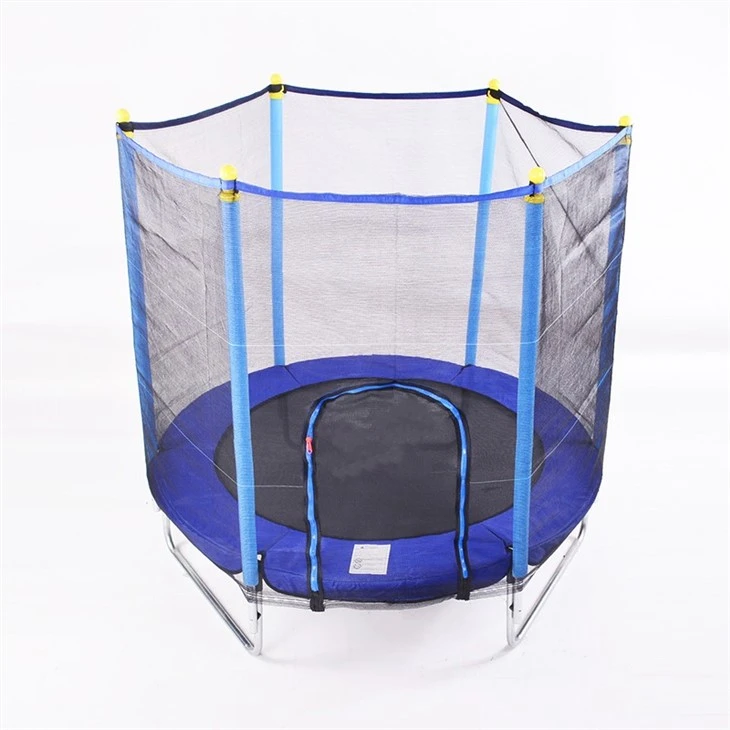
A safety enclosure is a vital feature of a kids' trampoline. It helps prevent kids from falling off the trampoline while they are jumping. Check the enclosure net for holes, tears, or loose connections. The net should be made of a strong and durable material that can withstand the impact of a child hitting it.
Inspect the poles that support the enclosure. They should be firmly attached to the frame and in good condition. Look for any signs of bending or damage to the poles. The zippers on the enclosure should work smoothly and securely close. If the enclosure is damaged or not properly installed, it won't provide adequate protection for the kids.
5. Assembly and Installation
Even if the individual components of the trampoline seem to be in good condition, improper assembly and installation can still pose a safety risk. Check if the trampoline has been assembled correctly according to the manufacturer's instructions. All the parts should be tightly connected, and there should be no loose bolts or nuts.
Make sure the trampoline is placed on a flat and stable surface. Uneven ground can cause the trampoline to tip over during use. If the trampoline has been moved or stored in a way that could have affected its assembly, it's a good idea to disassemble and reassemble it to ensure everything is in place.
6. Manufacturer's Reputation and Standards
If possible, find out the manufacturer of the second - hand trampoline. Reputable manufacturers are more likely to adhere to safety standards and use high - quality materials. Look for any safety certifications on the trampoline, such as ASTM (American Society for Testing and Materials) or TUV (Technischer Überwachungsverein) certifications. These certifications indicate that the trampoline has met certain safety requirements.
You can also research the manufacturer online to see if there have been any recalls or safety issues associated with their products. If the manufacturer has a history of producing unsafe trampolines, it might be a red flag, even if the specific trampoline you're looking at seems okay at first glance.
Our Product Recommendations
As a supplier of Color Trampolines for Kids, we offer a range of high - quality trampolines that meet strict safety standards. Our 55inch 1.4m Trampoline with Net is perfect for smaller spaces and younger kids. It comes with a sturdy frame, a durable jumping mat, and a reliable safety enclosure.
For larger yards or more active kids, our 8ft Trampoline Square provides a spacious jumping area. It is designed with strong springs and a high - quality frame to ensure a safe and enjoyable bouncing experience.
If you're looking for an indoor option, our 1.4m - 1.5m Small Trampoline Indoor is a great choice. It is compact and easy to set up, making it ideal for indoor play.
Contact for Purchase and Negotiation
If you're interested in purchasing a new color trampoline for kids or have any questions about our products, we welcome you to contact us for further discussion. We are committed to providing you with the best products and services to ensure the safety and enjoyment of your children.
References
- ASTM International. (2023). Standards for trampolines.
- Consumer Product Safety Commission. (2023). Trampoline safety guidelines.


