


As a supplier of big outdoor trampolines, I understand that maintaining the optimal tension of the springs is crucial for both the safety and performance of these exciting recreational items. In this blog, I'll share some in - depth knowledge on how to adjust the tension of the springs on a big outdoor trampoline.
Why Spring Tension Matters
Before we dive into the adjustment process, it's essential to understand why proper spring tension is so important. Firstly, consistent spring tension ensures a uniform bounce across the entire trampoline surface. This not only provides a more enjoyable jumping experience but also reduces the risk of uneven wear and tear on the trampoline mat. When the springs are evenly tensioned, the mat will flex and rebound in a balanced way, preventing some areas from bearing more stress than others.
Secondly, safety is a major concern. Incorrect spring tension can lead to an unstable trampoline. If the tension is too loose, jumpers may sink too deeply into the mat, increasing the likelihood of hitting the frame. On the other hand, overly tight springs can cause the mat to be too rigid, resulting in a harsh bounce that could potentially lead to injuries.
Tools You'll Need
To adjust the spring tension on a big outdoor trampoline, you'll need a few essential tools. A spring puller is perhaps the most critical tool. It allows you to stretch the springs to the appropriate length and attach or detach them from the trampoline frame and mat. A measuring tape is also useful to ensure that all springs are stretched to the same length, maintaining consistent tension. Additionally, a pair of work gloves is recommended to protect your hands from sharp edges and potential pinches.
Step - by - Step Guide to Adjusting Spring Tension
Step 1: Inspect the Trampoline
Before making any adjustments, thoroughly inspect the trampoline. Look for signs of damage to the springs, such as rust, corrosion, or broken coils. Check the trampoline frame for any cracks or loose parts. Also, examine the mat for tears or excessive wear. If you find any damaged components, it's best to replace them before adjusting the spring tension.
Step 2: Remove the Springs
Start by removing the springs from the trampoline. Use the spring puller to carefully detach each spring from the frame and the mat. As you remove the springs, place them in an organized manner, perhaps by grouping them according to their position on the trampoline. This will make it easier to reinstall them correctly.
Step 3: Measure the Springs
Take the measuring tape and measure the length of each spring. This will give you a baseline for the current tension. Write down the measurements for each spring. You'll want to aim for a consistent length across all springs when you reinstall them.
Step 4: Adjust the Springs
If you find that some springs are significantly shorter or longer than the others, you can adjust their tension. For springs that are too short, you can use the spring puller to stretch them slightly. Be careful not to over - stretch the springs, as this can weaken them and reduce their lifespan. If a spring is too long, you may need to replace it with a new one of the correct length.
Step 5: Reinstall the Springs
Once you've adjusted the springs, it's time to reinstall them. Start at one point on the trampoline and work your way around in a clockwise or counter - clockwise direction. Use the spring puller to attach each spring to the frame and the mat, making sure that it is securely fastened. As you install the springs, double - check that they are all the same length.
Step 6: Test the Tension
After reinstalling all the springs, test the tension of the trampoline. Have someone gently jump on the trampoline in different areas. Pay attention to the bounce. If the bounce feels uneven or too harsh, you may need to make further adjustments to the spring tension.

Tips for Maintaining Spring Tension
- Regularly inspect the springs for signs of wear and tear. This should be done at least once a month during the peak usage season.
- Keep the trampoline clean and dry. Moisture can cause the springs to rust, which will weaken them over time.
- Avoid overloading the trampoline. Excessive weight can put too much stress on the springs and cause them to lose their tension prematurely.
Our Product Recommendations
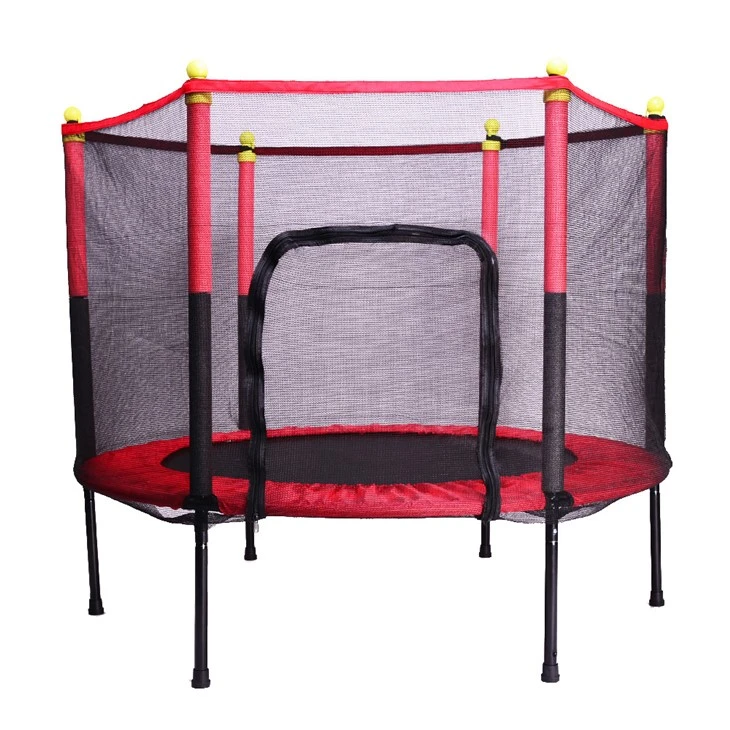
As a big outdoor trampoline supplier, we offer a wide range of high - quality trampolines. If you're looking for a smaller option, our Small Outdoor Trampoline with Net is a great choice. It's perfect for younger children or for those with limited outdoor space.
For families with kids, our 10FT Trampoline for Kids provides a large jumping area and is designed with safety in mind.
If you're interested in a specific size, our 1.4m Trampoline with Net offers a balanced combination of size and performance.
Contact Us for Purchasing
If you're in the market for a big outdoor trampoline or need further advice on spring tension adjustment, we're here to help. Our team of experts can provide you with detailed information about our products and assist you in making the right choice for your needs. Whether you're a retailer looking to stock our trampolines or an individual looking for a great addition to your backyard, we welcome you to contact us for a purchase and negotiation.
References
- "Trampoline Safety and Maintenance Guide" - American Academy of Pediatrics
- "The Physics of Trampolines" - Physics Today Journal
- Manufacturer's manuals for big outdoor trampolines.


